What are anal fissures?
An anal fissure is a small tear in the lining of the anal canal, most commonly caused by constipation or the passage of hard stools. It can cause significant pain during and after bowel movements, as well as bleeding. Whilst many fissures heal with conservative management, some become chronic and require specialist treatment.
Mr Daulatzai offers both medical and surgical management of anal fissures, including topical treatments, Botox injection, and lateral sphincterotomy where indicated. Treatment is tailored to your individual symptoms and circumstances, with the aim of achieving full healing and long-term relief.
Symptoms and when to seek help
The hallmark of an anal fissure is sharp, tearing pain during bowel movements, often followed by a burning or throbbing ache that can last for minutes or hours. Bright red blood on the toilet paper or a small streak in the pan is common. Many patients also develop a fear of opening their bowels, which can worsen constipation and delay healing.
An acute fissure often follows passage of a hard stool or a period of straining. If symptoms persist beyond six to eight weeks, the fissure is considered chronic and is less likely to heal without targeted treatment. You should arrange specialist review if pain is severe, bleeding is recurrent, or conservative measures from your GP have not helped.
Rectal bleeding should always be assessed by a specialist, even when a fissure seems the likely cause, to exclude other conditions such as haemorrhoids, fistula, or bowel pathology.
Assessment and treatment options
Assessment includes a careful history of bowel habit, pain pattern, and previous treatments, followed by a tailored examination. I explain findings clearly and discuss a stepwise plan, starting with the least invasive effective option.
Initial treatment usually focuses on softening stools, relieving internal sphincter spasm, and allowing the tear to heal. Topical preparations that relax the sphincter are commonly used, alongside dietary fibre, adequate hydration, and avoidance of straining.
When conservative treatment is unsuccessful, botulinum toxin injection or surgical lateral sphincterotomy may be recommended. These approaches reduce sphincter spasm and create conditions favourable for healing. I discuss success rates, recovery, and the small risk to continence before any procedure, so you can make an informed decision.
Recovery and follow-up
Many acute fissures settle within a few weeks of optimised bowel habit and topical therapy. After botulinum toxin or surgery, discomfort during bowel movements typically improves progressively over one to two weeks, though full healing may take longer.
I provide practical advice on pain relief, bathing, and return to work. Follow-up is arranged to confirm healing and address any recurrence early. Most patients achieve durable relief when treatment is matched to the type and duration of the fissure.
Your consultation
Anal fissure is a common but treatable condition, and specialist assessment prevents unnecessary suffering. Appointments are available through NHS referral and private practice across London and Hertfordshire.
Contact my team to arrange a confidential consultation. Your first appointment allows full discussion of symptoms, examination where appropriate, and agreement of a personalised treatment plan.
Frequently asked questions
Do I need a GP referral to see Mr Daulatzai privately?
A GP referral is not strictly required for a private consultation, though it is strongly recommended. A referral letter provides important background clinical information and ensures continuity of your care between your GP and specialist. If you would like to self-refer, please contact the secretary directly and we will be happy to assist.
What happens at my first consultation?
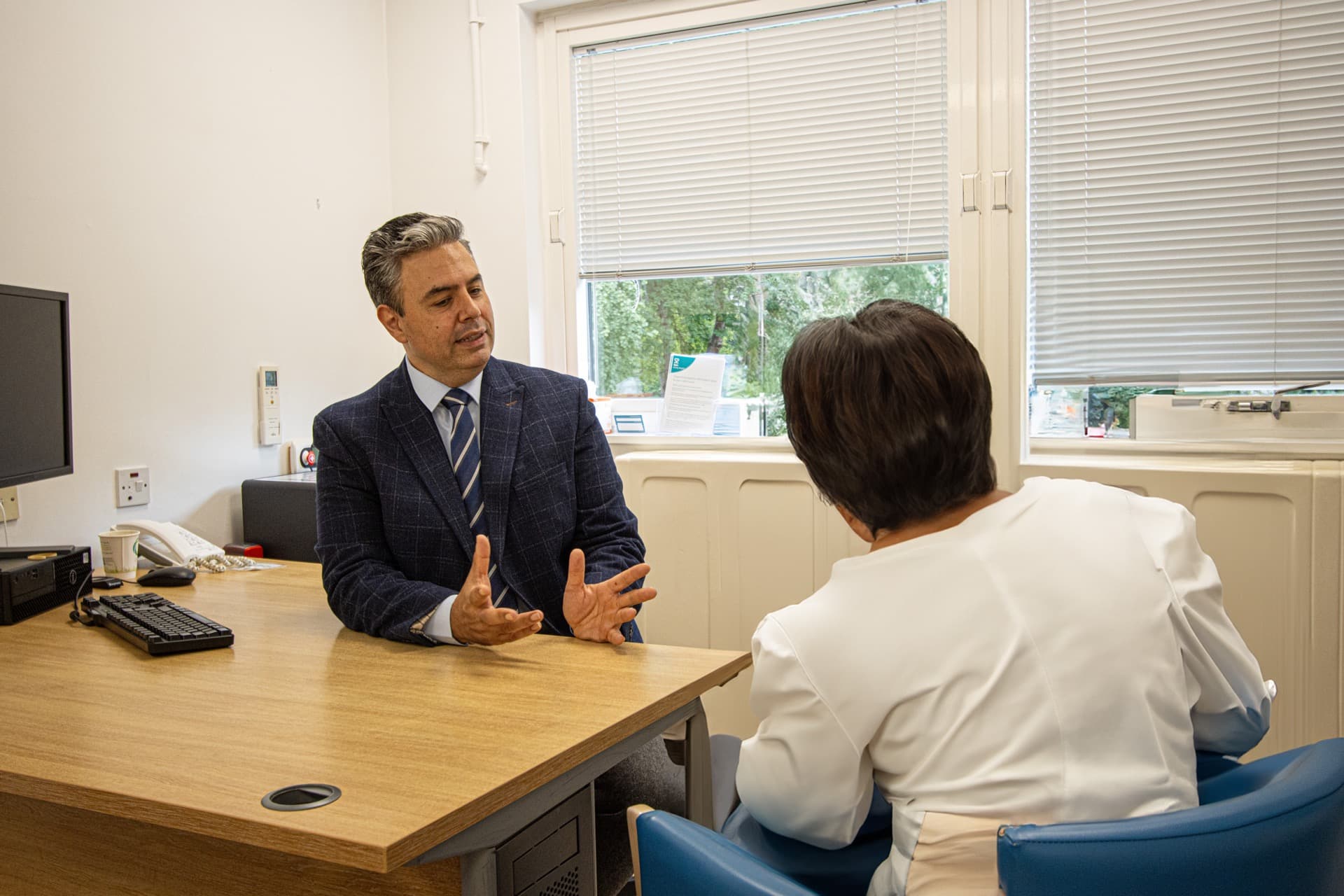
Your first appointment will typically last 30 to 45 minutes. Mr Daulatzai will take a full history, review any relevant investigations, and examine you where appropriate. He will explain your diagnosis and all available treatment options clearly, and involve you fully in any decisions about your care. There is no obligation to proceed with any treatment at the initial consultation.
How long will I need off work after surgery?
Recovery times vary depending on the procedure. As a general guide:
• Minor procedures (haemorrhoid banding, anal procedures): one to three days.
• Robotic or laparoscopic bowel surgery: two to four weeks, depending on the nature of the operation and your occupation.
• Open surgery: four to six weeks.
Mr Daulatzai will give you personalised guidance on expected recovery at your consultation and again before your procedure.